Strong Joints
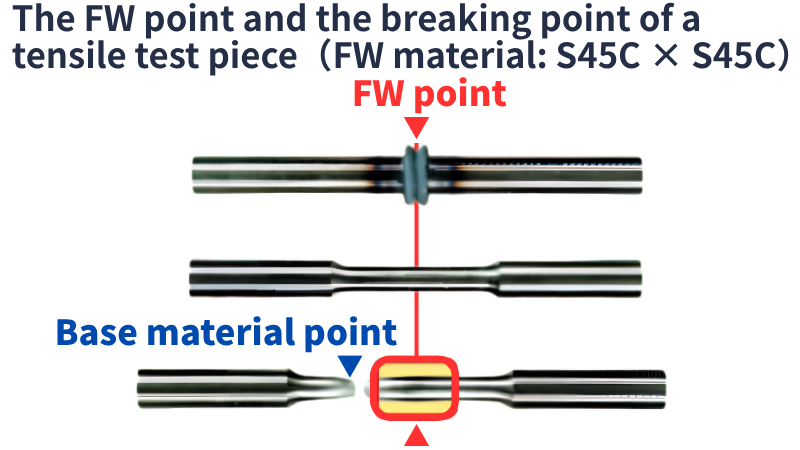
Heat generated by friction hardens the joint, delivering strength equal to or greater than the base material. Tensile testing confirms that failure occurs in the base material rather than at the joint.
Excellent Airtightness
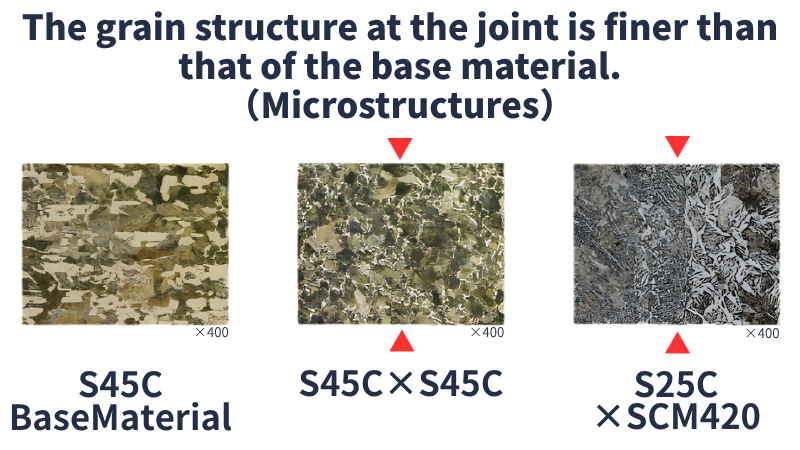
Plastic flow creates a closely bonded interface with minimal gaps, making the process suitable for components requiring high airtightness.
Dissimilar Materials
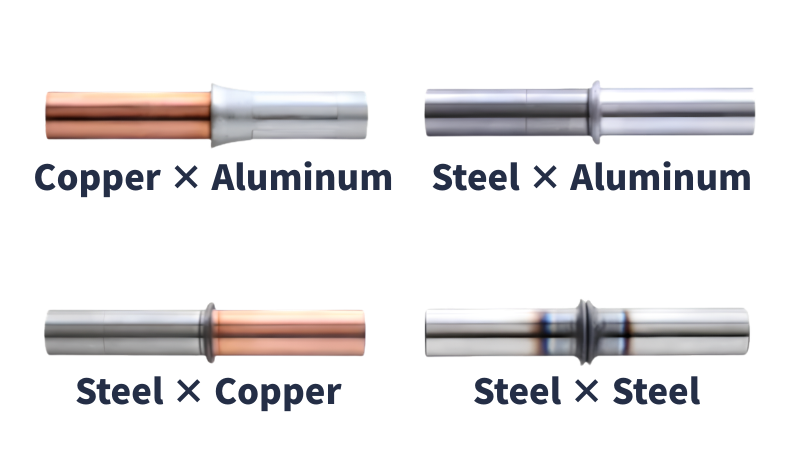
Materials with different properties, such as steel and aluminum, can be joined. Optimized material use helps reduce material costs and manufacturing processes.
Environmentally Responsible
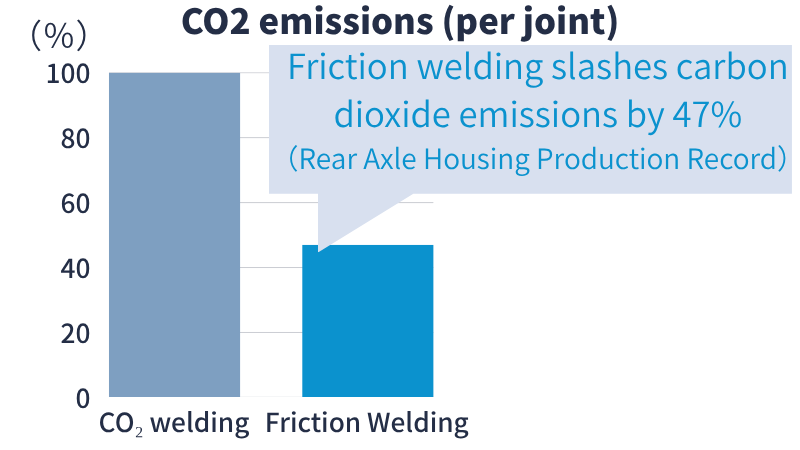
No filler metal or shielding gas is required, and the process suppresses fumes and spatter, reducing environmental impact and providing a clean joining process. CO₂ emissions per joint are approximately 47% lower than CO₂ welding (rear suspension link example).
Initiatives for New Technologies
Insert Friction Welding
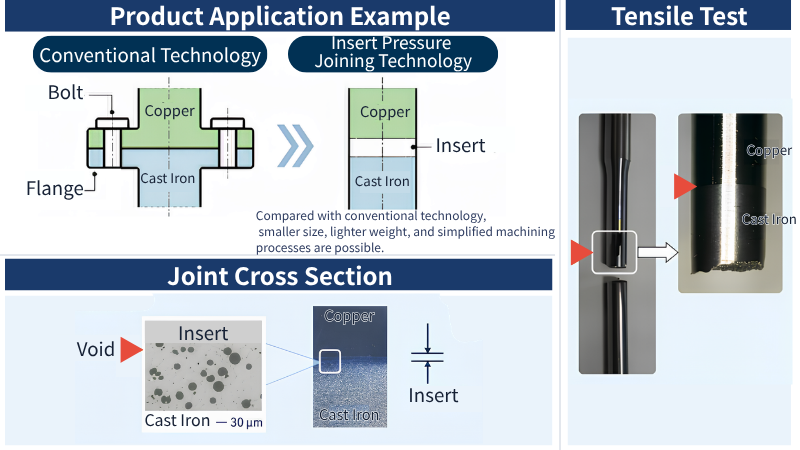
We have developed a proprietary friction-welding technology for solid-state joining of cast iron and copper. Cast iron is generally difficult to weld and has traditionally required bolt fastening when used in functional components. Adding an insert material prevents deformation of the spheroidal graphite while creating a strong joint. This technology enables smaller, lighter functional components and reduces fastening and machining operations. Patent pending.
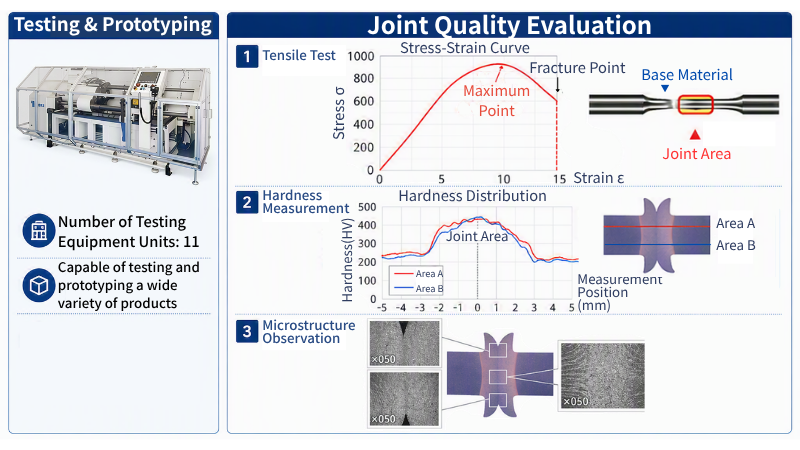
In-house Joining Tests, Prototype Machining and Joint Quality Evaluation
Using our own friction welders, we conduct joining tests and prototype machining. Drawing on extensive experience, we recommend suitable materials, sizes, shapes, equipment, and joining conditions. Evaluation capabilities include tensile testing, hardness measurement, and basic microstructural observation. Through testing, machining, evaluation, and sample supply, we support product development, process improvement, and mass-production studies, providing the data and expertise needed for unfamiliar specialty materials and stringent quality requirements.
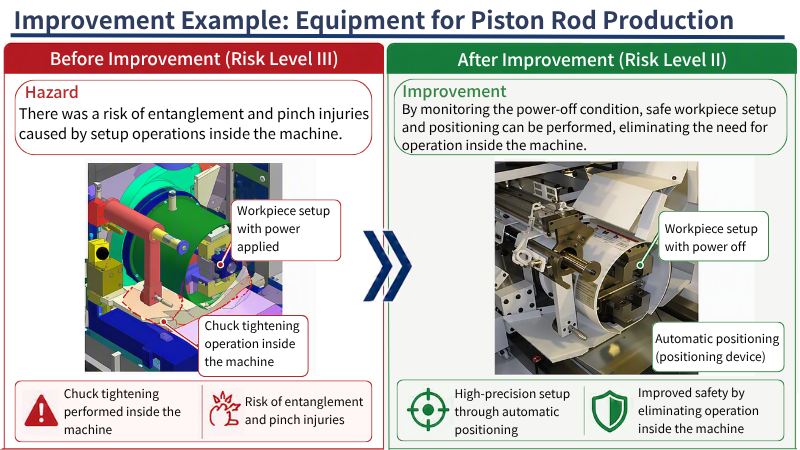
Safety-Focused Equipment
Our friction welders comply with Toyota Industries Corporation ' fundamental equipment-safety standards. We conduct risk assessments and provide equipment designed for operator safety, a secure working environment, and dependable operation.

Dedicated After-Sales Service Team
Our specialist service team provides technical support for maintenance, inspections, and troubleshooting. Technicians with in-depth knowledge of equipment construction respond to each situation, supporting stable operation and peace of mind on the production floor.
NEW Compact Friction-Welding Unit (Gantry and Robot Applications)
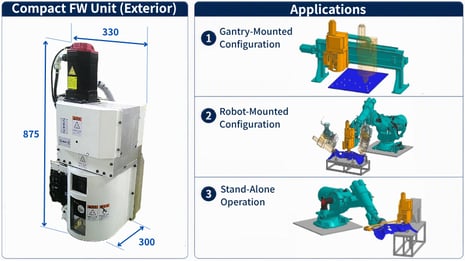
We developed a compact, lightweight friction-welding unit that can be transported to mobile equipment. By moving the unit itself, small parts can be joined to large products such as vehicle bodies and control panels that are difficult to load into conventional equipment. It can be mounted on a gantry for joining on any flat surface or on a robot for joining at freely selected positions and angles. Equipped with both a rotating shaft and a thrust shaft, it can also operate as a standalone unit.